

Clinical Research
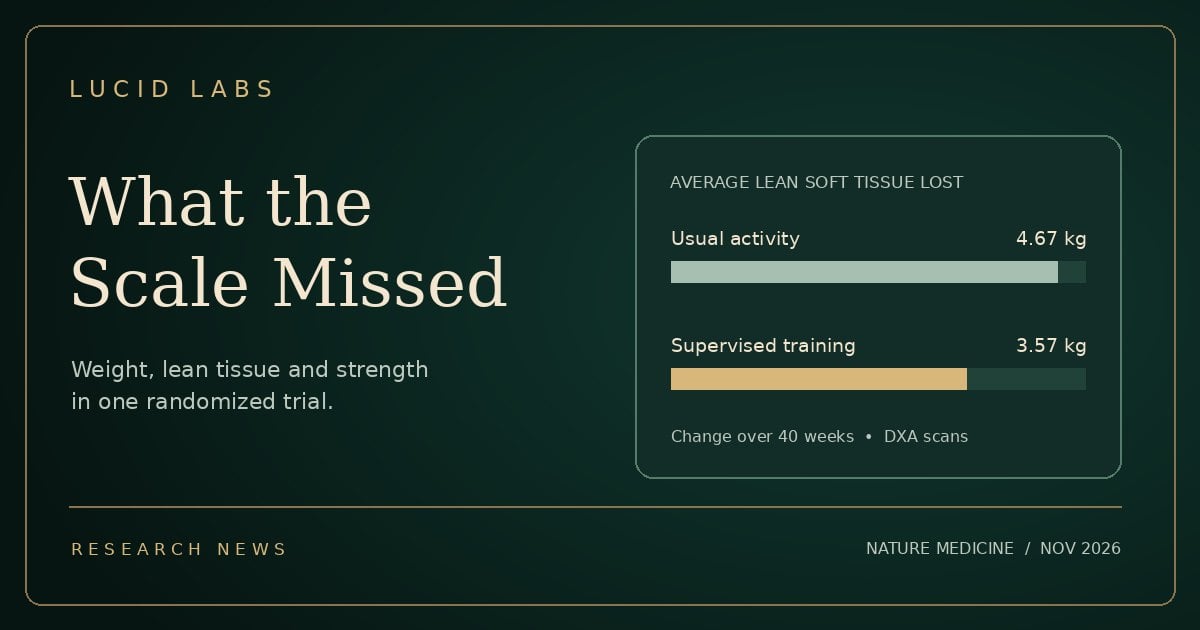
They Lost Almost the Same Weight. What the Scale Missed.
Two groups in a 40-week tirzepatide trial lost around 22 kilograms each. A scan and a set of strength tests showed where their results differed.
Read the story
Lucid Labs sells research compounds to adults 21 and over. Confirm to enter.
This site is restricted to 21+ users; all products are for in-vitro laboratory research and analytical use only, are not FDA-approved, and are not intended for human/animal use or to diagnose, treat, cure, or prevent disease.
Age confirmation does not substitute for any other legal eligibility requirement.
Lucid Labs Editorial
Peptide science and the discoveries behind the headlines, with links to the original sources.
Clinical Research
Two groups in a 40-week tirzepatide trial lost around 22 kilograms each. A scan and a set of strength tests showed where their results differed.
Read the story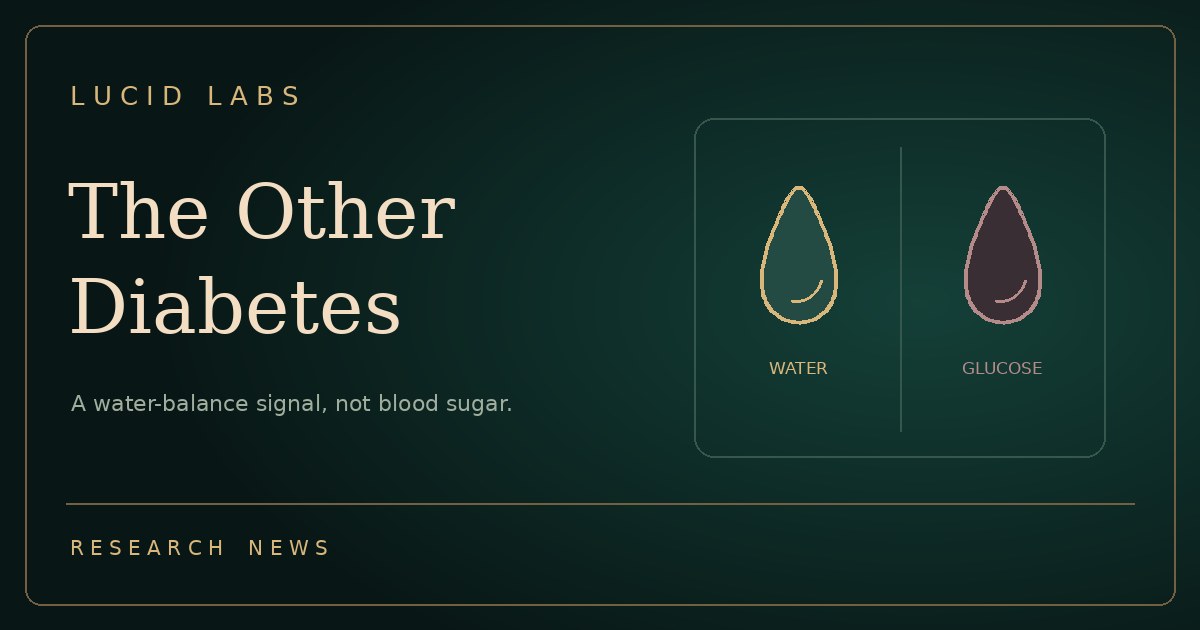
Clinical Research
Two conditions share a name. More than 800 people in one survey said even health professionals had confused them. A new pilot study shows why getting the distinction right takes more than a vocabulary lesson.
Read the story
Clinical Research
Bone density fell in an exploratory CagriSema analysis. Here’s why that doesn’t answer whether fractures became more or less likely.
Read the story
Research Literacy
One famous experiment gave oxytocin a reputation it couldn't quite live up to. Two registered replications show what happened when researchers asked the same question again.
Read the story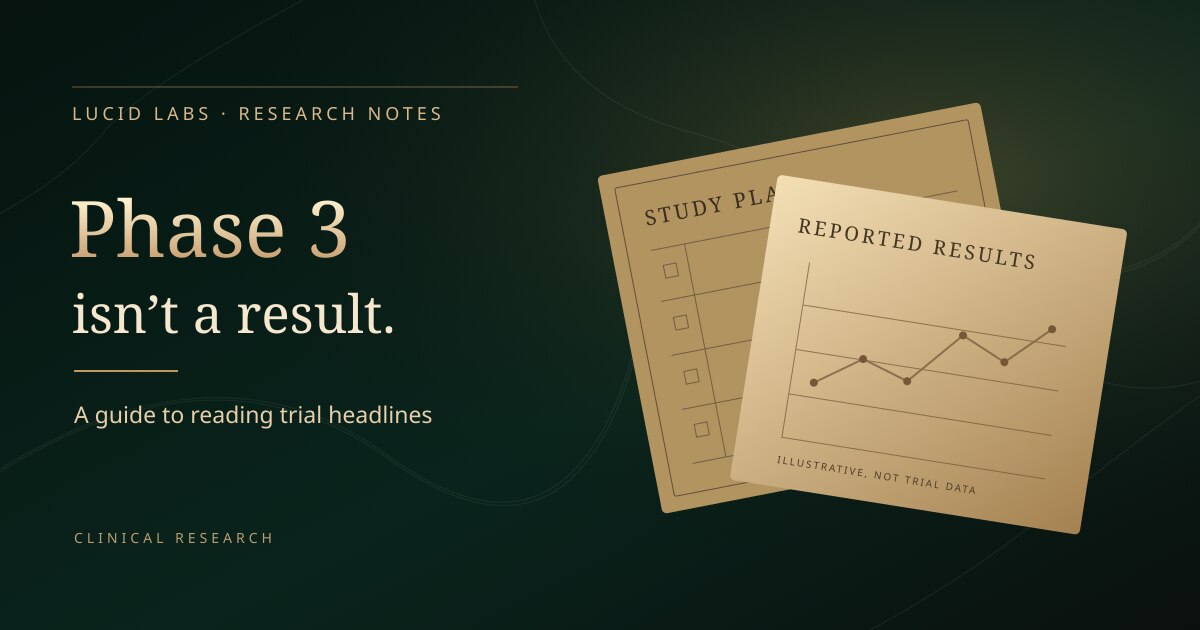
Clinical Research
A study announcement tells you what researchers plan to measure. Reported results tell you what they found. Here’s how to tell the difference.
Read the story
Clinical Research
A Phase 3 trial in a specific group of patients with acute myeloid leukemia reported median survival of 24.0 versus 14.7 months. Here’s what that comparison does and doesn’t tell us.
Read the story
Science History
A peptide in Gila monster venom was a clue, not a treatment. Here’s what it took to get from a 1992 discovery to an FDA-approved medicine in 2005.
Read the story